What Makes a Good Cookbook?
Committing to writing and publishing a cookbook requires research and detail to make your work user-friendly and stand out from the competition. Therefore, to successfully market it, you may be thinking, “what makes a good cookbook?” Luckily, there are several answers to this question with key components to help you feel confident about publishing.
Fill a Niche
Focus on a specific theme instead of a general cookbook with many recipes covering an array of topics. True, there are a lot of niched cookbooks out there, but there are still many other areas for you to explore and present.
By writing a specialized cookbook, you establish yourself as an expert in your field. Potential buyers will know what to expect from your cookbook and will trust that yours has precisely what they want.
How Many Recipes Will I Need?
One of your first decisions to make when publishing a cookbook is if it’ll be digital or printed. Of course, the answer to that question will determine how many recipes you’ll want to include.
An ebook will generally be shorter in length to promote easier navigation, containing around 40 recipes or so. Ebooks are typically less expensive than printed books, so many authors opt to include fewer recipes published within multiple cookbooks.
On the other hand, a printed cookbook will have on average 150 recipes. This number may fluctuate depending on the book design, the amount of artwork included, and the additional commentary. Consider Palmetto Publishing for book printing services if you are interested in producing a printed cookbook.
Get Started On Your
Publishing Journey Today!
Or call us 888 408 8965
Some Common Mistakes in a Cookbook
For your cookbook to be successful and authoritative, maximize its usability by avoiding a few common publishing mistakes.
Small Text
You don’t want your readers to peer at a finely printed recipe, hands full and sticky and looking for the next steps. Make it easy to see where they are within the directions while keeping a professional book design. Be sure to consider text size designing the book interior formatting and book title page.
Having to Page Jump
Whenever possible, include the entire recipe (and sub-recipes) in one place. For instance, avoid instructions on one page that ask your readers to look further into the book for an additionally needed recipe.
True, keeping all information on the main page(s) may lead to recipes repeating or fewer recipes in your cookbook altogether. But keep in mind that successful book editing and marketing mean advocating for the reader. If your book isn’t convenient to use, it may not be used at all.
Types of Measurements and How to Find Ingredients
Keep your measurements and ingredients accessible to your readers. Typical publishing in the U.S. will ask you to list measurements according to the imperial system, not metric. You can also opt to include a conversion list for each measurement.
For more obscure ingredients, do your readers a favor and include a substitute or instructions on finding the listed ingredient.
If you have writing-style questions, consult Palmetto Publishing for your book editing needs.
Needing Too Much Cooking Equipment for the Recipe
When selecting recipes to include, consider the size of the average kitchen. Readers may not have the required counter space for using many appliances all for one recipe.
Also, think about the kinds of equipment most people own. Suggested appliance substitutions will make your cookbook more inclusive. Furthermore, you risk limiting your book-marketing success if your included recipes call for only industrial kitchen equipment.
When you’re satisfied with hitting all the marks in your cookbook, your next step is to publish! Palmetto Publishing will assist you with each level of the publishing process, from editing, designing, printing, marketing, and more.
Get Started On Your Publishing Journey
Or call us
888 408 8965
Related Articles
Book Page Layout 101: A Complete Guide
There are many page layout template options that you can use. However, depending on the page setup including page breaks, illustrations, and the size you require, this can get tricky. Book page layout considers not just the information to include but also the medium. For example, the book page layout design depends on the size…Inside Perspective Brings Depth to ‘Within the House of Murdaugh’
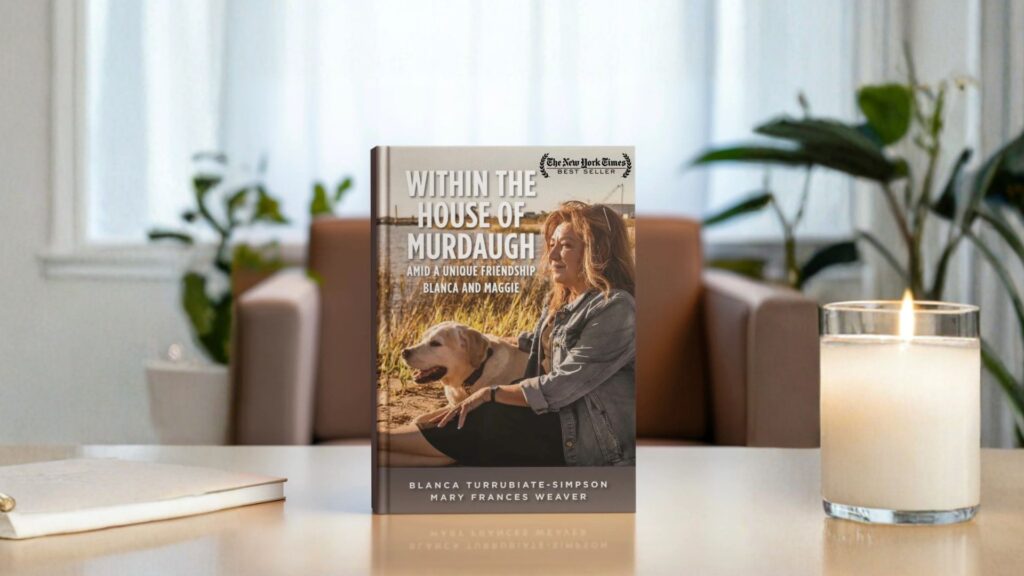
When Within the House of Murdaugh debuted, readers across the country were already familiar with the headlines surrounding one of the most closely watched criminal cases in recent memory. What they had not yet encountered was the deeply personal perspective at the heart of the story — one that could only come from someone who lived inside…Social Media Marketing for Authors
When we think of ways to use social media marketing that have a real impact on growing your author’s platform and successfully launching a book, we should have the right aim to be happy with the results. For instance, the number of people who may like, comment, follow, retweet, or share is much lower than…