
Exclusive Interview with Road to Antietam Author Tom E. Hicklin
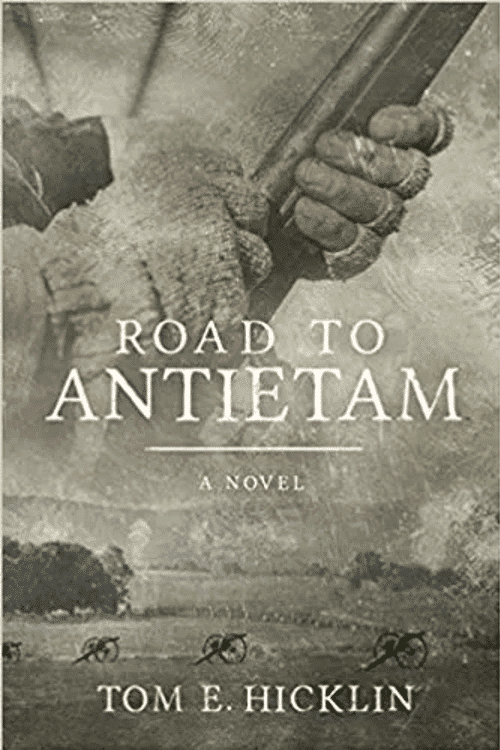
We had the opportunity to chat with Tom E. Hicklin, author of the newly released Road to Antietam, about his writing process, how he deals with writer’s block, and why he decided to write Road to Antietam
How do you approach writing? Do you have a routine or process that you follow?
I am very much a seat-of-the-pants writer. I start with an idea, maybe an overall story arc and a few scenes, then I just start writing. Usually I have a pretty good idea of how a scene or chapter will play out before I start writing, but sometimes the scene just writes itself. Some of what I consider the most memorable events in Road to Antietam were written that way. I just started writing and let what I thought the characters would say or do, or how they would react, dictate where the story went.
How do you cope with writer’s block?
Not well. I avoid the manuscript and do other things. Writing historical fiction, I can always avoid writing by telling myself I need more research, or I need to reread the regimental history to make sure I have the timeline and events right. Then, when I do write, I sometimes only manage a few paragraphs.
I have to keep telling myself, this is just the first draft—it doesn’t matter how crappy it is as long as I have something to work with later in the editing phase. Eventually, something will click—one of those life inspirations—and then I can’t write fast enough to keep up with the scene playing out in my head.
Was there anything about the writing or publishing process that surprised you?
As far as writing, the emotional investment was surprising. I thought since I was the one making things up, it would be a more clinical process. Boy, was I wrong.
Publishing, at least independent publishing, is like traversing a minefield. The process, while fairly simple and straightforward, is complicated by the overwhelming number of options available; and with every option, there is a choice that can mean the difference between success and failure.
Why Road to Antietam?
I decided I wanted to write Road to Antietam while visiting the battlefield. I wanted to try and reach people who are interested in history, but not enough to wade through a big, boring nonfiction tome or some
hard-to-read nineteenth-century literature. I was recently talking to a park ranger at the Spotsylvania battlefield who’d recently completed his master’s in history. His interest in history began in the seventh grade when he read The Killer Angels by Michael Shaara. I hope that someday someone will be able to say the same about Road to Antietam.
What are you working on next?
I’m working on a sequel to Road to Antietam, which took the Galloways and the 8th Ohio Volunteer Infantry from the beginning of the war to the Battle of Antietam. The next book will go from there to the end of their three-year enlistment in 1864. In that time, the 8th fought in, or was at least present at, almost every major battle in the eastern theater. That includes Fredericksburg, Chancellorsville, Gettysburg, The Wilderness, Spotsylvania Courthouse, Cold Harbor, and the first siege of Petersburg. So, it will definitely have a lot of action.
Want more? Hang tight for an excerpt from Road to Antietam.
As the brigade trotted toward the fight, they met large groups of soldiers running the other way, trying to push their way through the lines. The lines fragmented, and the regiments separated. Christopher lost track of the green troops of the 132nd Pennsylvania and all the others they’d marched with the last several months. His world was once again the 8th Ohio. The men he’d marched with, fought with, argued and laughed with, the men who had been his world for most of the last year and a half.
Christopher no longer heard the cannon and rifle fire, he only heard the breathing of those around him; he no longer saw the buildings and the surrounding landscape, he only saw what lay ahead.
And what he saw made his breath hitch and his muscles weaken.
Confederate soldiers lay beyond the ridge line. Mostly hidden, but they were there. Individually, or in groups, they would rise and fire into the approaching Federal soldiers, then drop back down out of sight.
Christopher now heard the buzzing whine of passing minié balls. He felt men in the line falling or dropping back. Sometimes he would hear the wet thud of a ball striking flesh.
With each incoming volley, Christopher hunched down a little more, until he was leaning forward like an old man in the face of a mighty wind.
He couldn’t breathe. He would try to suck in air, but it felt as if nothing was happening. Christopher’s head seemed to be floating atop his body, and he stumbled over the slightest ripple in the ground. His hands shook, and he feared he would drop his rifle. His sight had contracted until it was like looking down a long tunnel.
The ground before them was littered with dead and wounded. He’d seen worse carnage, even in the field they’d slept in just a couple nights before. But that had been after a whole day of fighting. This was only a few minutes, and already a regiment’s worth of men littered the field.
They had come down into the bottom of a swale earlier and now were running up the other side. Most of the bodies lay clustered at the top of the ridgeline they were approaching. As they crested the hill, Christopher had to look down at his feet to avoid stepping on someone.
He looked up and saw, only a few dozen yards ahead, a makeshift fortification of fence posts and planking. It was thrown up along a farm lane, sunken from years of use until it made a natural trench. Behind that fortification crouched thousands of Confederate soldiers. As the 8th stopped and made ready to fire, they rose up as one and fired a volley that shattered the regiment.
Ready to dig in to the full book? Road to Antietam can be purchased via Amazon here.
Get Started On Your Publishing Journey
Or call us
888 408 8965
Related Articles
How To Improve Your Author Website
How To Improve Your Author Website Selling more books is the number one goal for any author. Selling more books means having a great marketing strategy. An author’s website is an essential marketing tool for every potential author. Because technology is constantly evolving, you will need to update your site regularly to make it usable…Indie Publishing Vs. Self-Publishing: What is The Difference?
Self-publishing is often the umbrella that is held over two sorts of publishing: self-publishing and indie publishing. Both are great options for folks who want to get a book out on their own schedule, without having to spend loads of time querying agents or traditional publishing houses. The difference in indie publishing vs self-publishing is…Different Types of Book Genres
Stroll down the aisles of your local bookstore or library, and you’ll find books neatly sorted into dozens of genres like fantasy, romance, and true crime. These categories help readers find books that suit their moods and preferences. Genres also make it easier for writers to map out plots, advertise books, and reach the right…